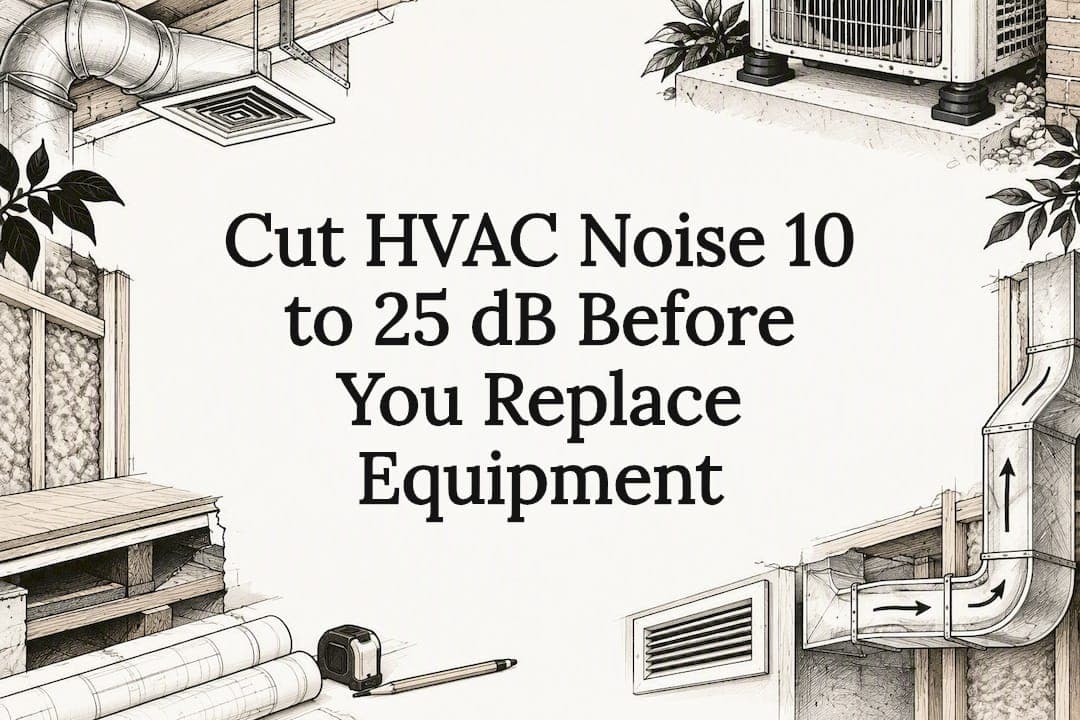
Most HVAC noise comes from one of three sources: moving air, a vibrating compressor or blower, or vibration travelling through ducts and framing into your living space. The fix is to diagnose which one you're dealing with, then apply the matching remedy, from vibration pads to duct lining, before considering equipment replacement. Combined low-to-medium cost fixes commonly cut perceived noise by 10 to 25 decibels; replacement delivers more, but at a much higher price.
TL;DR:
- Reducing HVAC noise by 10 to 25 decibels is achievable with low-cost fixes like duct sealing, insulating, or adding vibration pads, but full equipment replacement is significantly more expensive.
- Identifying whether noise originates from airflow, mechanical parts, or structural vibrations directs targeted solutions such as duct lining, vibration isolation, or system upgrades.
- External condenser noise can often be cut using vibration pads, blankets, or strategic reorientation, but fully enclosing units risks efficiency loss and compressor damage.
- Upgrading to variable-speed compressors and ECM blowers can eliminate loud startup surges and mechanical whines, extending system lifespan for equipment over 12 to 15 years.
- Planning mechanical placement and duct routing during renovation prevents future noise issues, as retrofitting fixes later is less effective and more costly.
Table of Contents
- What's causing your HVAC noise reduction problem?
- How do you quiet a noisy outdoor condenser unit?
- Can better ductwork solve HVAC noise problems?
- What stops vibration from travelling into walls and floors?
- Is it time to replace equipment instead of repairing it?
- What does HVAC noise reduction cost, and how long does it take?
- How renovation planning prevents HVAC noise before it starts
- When should you sequence fixes yourself versus calling a specialist?
- How Y&CO Build handles mechanical noise during a full renovation
- Sources
- FAQ
What's causing your HVAC noise reduction problem?
Three noise types dominate residential and light commercial systems, and each has a distinct signature.
- Aerodynamic noise sounds like rushing air, whistling, or hissing at registers, usually caused by high duct velocity or undersized ductwork.
- Mechanical noise is the buzzing, humming, or clicking coming directly from the compressor, blower motor, or fan bearings.
- Structure-borne noise is the low rumble you feel more than hear, transmitted through refrigerant lines, ductwork, or the building frame itself.
Test each path separately. Stand at a supply register and listen for rushing air. Walk outside to the condenser and listen for grinding or rattling. Then touch exposed ducts or the equipment cabinet, since a vibrating surface points to a mechanical or structural path rather than airflow. ASHRAE's noise and vibration control guidance treats this as a source, path, and receiver problem, and identifying which of the three you're fighting determines everything that follows. For bedrooms, aim for NC 25 to 30; for open offices, NC 35 to 40 is generally acceptable.
How do you quiet a noisy outdoor condenser unit?
The compressor and fan outside your home are usually the loudest single component in the system, and they're also the easiest to treat without touching ductwork.
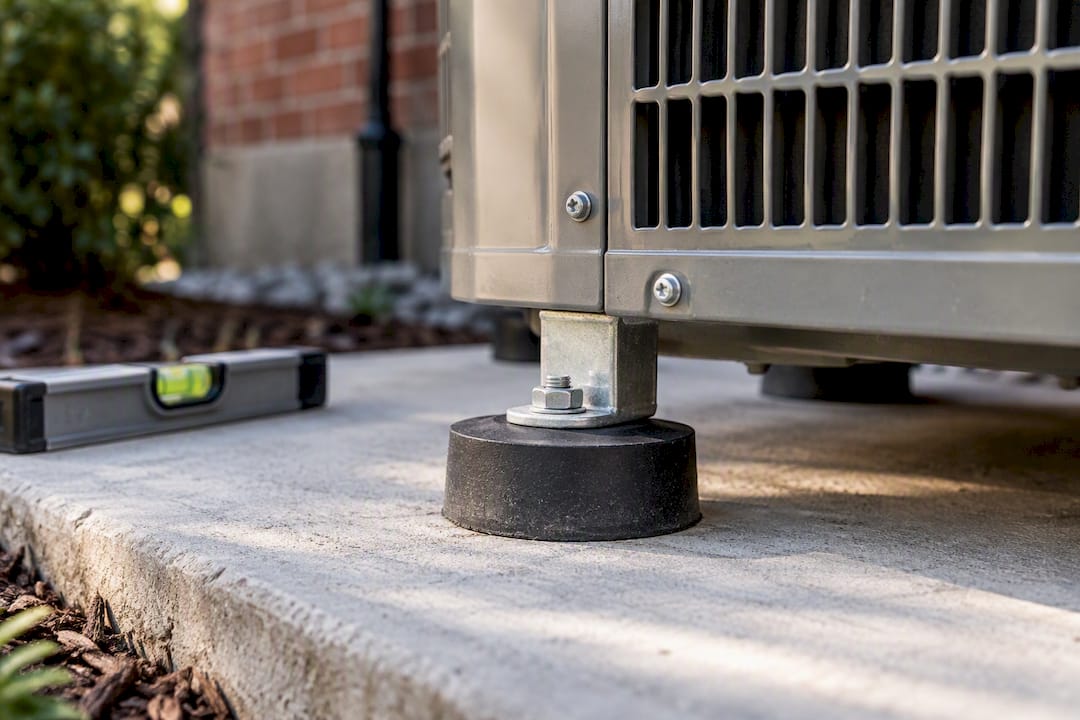
- Add vibration isolation pads or anti-vibration mounts under the unit's feet. Rubber or neoprene pads decouple the compressor from the concrete pad or wall bracket, often trimming several decibels of rumble at very low cost.
- Install a compressor blanket around the compressor housing (not the fan). This dampens mechanical hum but needs clearance from refrigerant lines and airflow paths, so check manufacturer specs before wrapping anything tight.
- Reposition or reorient the unit where possible. Distance and blocking line-of-sight to bedroom windows both matter more than most homeowners assume.
- Build a sound barrier or screen, keeping at least 12 inches of clearance for airflow. A solid fence or acoustic panel that blocks line of sight can provide up to roughly 15 dB of midfrequency reduction, but that ceiling rarely moves higher unless you also add distance.
Pro Tip: Never fully enclose a condenser to kill noise. Restricted airflow raises head pressure, cuts efficiency, and can shorten compressor life. Treat sound, don't trap heat.
Can better ductwork solve HVAC noise problems?
Aerodynamic noise rises sharply with air velocity. Doubling airflow speed through an undersized duct doesn't just double the noise. It multiplies it several times over, which is why resizing or smoothing a duct run often outperforms adding insulation.
Practical fixes, roughly in order of typical impact:
- Increase duct cross-section where velocity is highest, especially near the air handler.
- Apply acoustic duct liner to the first 10 to 15 feet downstream of the blower, where turbulence noise is generated before it travels through the system.
- Install in-line duct silencers on runs feeding bedrooms or quiet zones, but size them carefully. AMCA guidance recommends keeping added pressure drop under roughly 0.35 inches of water column so the silencer doesn't force the blower to work harder and generate its own noise.
- Seal duct leaks and smooth sharp transitions or elbows, both common and overlooked causes of whistling at registers.
- Check return-air sizing. An undersized return is a frequent, quietly ignored source of persistent whooshing noise that no amount of supply-side treatment will fix.
What stops vibration from travelling into walls and floors?
Rumble that you feel through a floor or wall almost always means vibration is bypassing your air path entirely and travelling through solid connections.
- Flexible duct connectors between the air handler and rigid ductwork absorb motion before it reaches the frame.
- Neoprene or rubber isolation pads under the indoor unit and refrigerant-line isolators where lines pass through walls both interrupt the same transmission path.
- Spring hangers on suspended ductwork prevent joists from acting as a soundboard.
Isolation measures like these are frequently the most cost-effective first step for structure-borne complaints, often delivering meaningful reduction for a modest parts cost. Before investing in a floating equipment base or upgraded mechanical-room supports, confirm vibration really is the dominant path: turn the system on and off while someone stands in the affected room. If the rumble stops the instant the unit shuts down but airflow noise from a register continues, you're dealing with two separate problems, not one.
Pro Tip: A five-dollar rubber puck under a condenser foot sometimes outperforms a $2,000 replacement decision. Test isolation before assuming you need new equipment.
Is it time to replace equipment instead of repairing it?
Not every noisy system needs remediation. Some need replacing, and the tell is usually age combined with a specific type of noise rather than volume alone.
- Variable-speed or inverter compressors ramp gradually instead of slamming on at full capacity, which eliminates the loud startup surge that older single-stage units produce.
- ECM (electronically commutated motor) blowers run at lower, steadier speeds most of the time, cutting both airflow noise and the mechanical whine of a traditional PSC motor.
- Equipment past 12 to 15 years old, especially with worn bearings or refrigerant charge issues, is usually a better replacement candidate than a remediation project.
- After any replacement, confirm the installer isolates the new unit properly, matches duct sizing to the new airflow rate, and rechecks placement. Skipping commissioning steps reintroduces the exact noise problems you just paid to eliminate.
What does HVAC noise reduction cost, and how long does it take?
Quick wins (pads, blankets, sealing leaks) rarely require permits and can happen in an afternoon. Duct resizing, relocation, or anything touching structural framing belongs in a renovation-scale project with proper planning and, in some jurisdictions, permitting.
How renovation planning prevents HVAC noise before it starts
Retrofitting noise fixes onto an existing layout is always more limited than designing quiet in from the start. When equipment selection, duct routing, and mechanical room placement happen together, before walls close up, you avoid the compromises that force homeowners into after-the-fact patchwork.
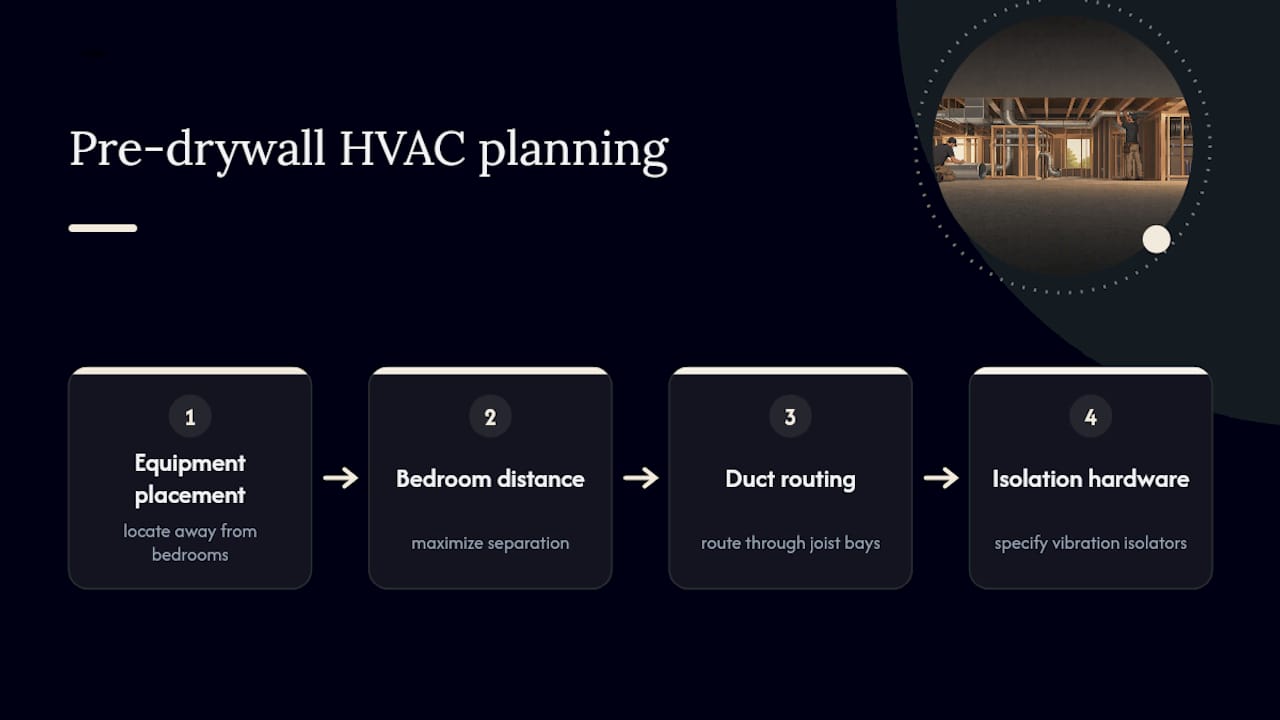
This is where a coordinated renovation process pays off. During a full-home renovation, decisions about where mechanical equipment sits relative to bedrooms, how ducts route through joist bays, and which isolation hardware gets specified all happen before drywall goes up. A renovation-centred approach to equipment selection and placement consistently outperforms piecemeal fixes applied years later. If you're planning major mechanical changes, bring a mechanical consultant into the conversation early, before duct routing and equipment placement get locked in.
When should you sequence fixes yourself versus calling a specialist?
Diagnose first, isolate second, treat the air path third, and only then consider replacement. That order saves money and avoids fixing symptoms instead of causes.
Low-frequency rumble that persists after isolation, or noise that seems to travel through multiple paths at once, is where a homeowner's toolkit runs out. That's the point to call in an acoustical consultant rather than guessing your way through another round of pads and blankets.
— Cory
How Y&CO Build handles mechanical noise during a full renovation
If your HVAC noise problem is tangled up with a bigger renovation, ductwork that needs rerouting, an addition that changes equipment placement, or a mechanical room that never worked in the first place, patch fixes only go so far. Mechanical selection, duct placement, and vibration isolation can be directly integrated into the construction plan, with a single point of contact managing the trades to ensure comprehensive coordination.

Unlike hiring separate contractors for HVAC and construction, having one person oversee both mechanical decisions and the build sequence allows isolation hardware and duct sizing to be specified before walls close rather than diagnosed afterward. If your renovation plans include relocating equipment or adding square footage, start with the full-home renovation page, or look at home additions if you're adding a rear or second-storey space where mechanical placement needs fresh planning. Reach out through the contact page to talk through your specific layout.
Sources
- ASHRAE Handbook — chapter 49: Noise and vibration control
- Understanding & reducing air system noise — AMCA materials
- How to reduce HVAC noise: 8 soundproofing solutions that actually work — HVAC Base
- Reduce HVAC noise in home — Nightingale Air
- Controlling noise from large rooftop units — Trane (ASHRAE-related guidance)
FAQ
How do you reduce HVAC blower noise?
Start by checking duct sizing near the air handler, since undersized ducts force air to move faster and generate more noise. Adding acoustic lining to the first 10 to 15 feet of ductwork and confirming the blower motor is properly isolated on rubber mounts usually resolves most blower-related noise.
What is the quietest type of HVAC system?
Systems with variable-speed or inverter compressors and ECM blower motors run quieter than single-stage equipment because they ramp gradually instead of cycling on and off at full power. Ductless mini-splits with inverter compressors also tend to run quieter than ducted forced-air systems of similar capacity.
Can I sleep at 50 dB from an air conditioner?
Fifty decibels is louder than most bedroom noise targets, which generally sit around NC 25 to 30, roughly comparable to a quiet library. Most people find continuous noise at that level disruptive to sleep, so it's worth pursuing isolation or ductwork fixes rather than accepting it as normal.
What is the acceptable noise level for HVAC?
Acceptable levels depend on the room: bedrooms generally target NC 25 to 30, while offices and living spaces tolerate NC 35 to 40. These NC (noise criteria) ratings come from the same ASHRAE framework used to size ductwork and select silencers.