If you're staying put for under 15 years or working with a tight budget, asphalt shingles are the smarter call. If you plan to own the house for 25 years or more, or you're in a region with brutal winters, metal roofing usually wins on lifetime value. Metal costs roughly two to three times more upfront than asphalt, but it can outlast shingles by decades when installed correctly, with hidden fasteners and proper ice protection under NBCC 9.26.
TL;DR:
- Metal roofing costs roughly two to three times more upfront than asphalt shingles, but it can last 40 to 70+ years compared to asphalt's 15 to 30 years.
- Proper installation of metal roofs with hidden clips and quality fasteners is crucial; poor installation can cause leaks and damage regardless of material type.
- In cold climates, metal sheds snow quickly, reducing ice dams, but requires snow guards to prevent hazards from sliding snow and ice.
- Asphalt shingles are more affordable initially and easier to repair but are more vulnerable to freeze-thaw damage and granule loss over time.
- The breakeven point for metal's higher initial cost versus asphalt's shorter lifespan occurs around 21 to 25 years, favoring metal for long-term homeowners.
Table of Contents
- Asphalt shingles vs metal roofing: pros and cons at a glance
- What does a metal roof cost compared to asphalt?
- How long does each roofing material really last?
- Which roof handles snow, ice, and hail better?
- What separates a good roof installation from a bad one?
- How do you decide between asphalt and metal for your home?
- What should a contractor check before touching your roof?
- What homeowners get wrong about this decision
- How Y&CO Build handles roofing inside a full renovation
- Sources
- FAQ
Asphalt shingles vs metal roofing: pros and cons at a glance
Both materials do the same basic job. How they get there, and what they cost you over time, is where the comparison actually matters.
Asphalt shingles remain the default choice for a reason. They're inexpensive to buy and install, easy to repair when a section fails, and available from just about every roofing crew in the country. The downsides show up over time: granule loss accelerates in freeze thaw cycles, and without a properly ventilated attic and ice-and-water shield, asphalt roofs are more vulnerable to ice damming in cold climates.
Metal roofing flips that trade-off. You pay more going in, but you get a system that sheds snow, resists fire, and can be recycled at the end of its life instead of filling a landfill. The catch is that metal punishes bad installation harder than asphalt does. A poorly fastened panel can dent, oil-can (that rippled, wavy look you sometimes see on cheap steel), or leak at every screw point once the washers age.
Here's how the two stack up on the factors homeowners actually ask about:
- Upfront cost: asphalt is cheaper by a wide margin; metal typically runs two to three times more per square.
- Lifespan: asphalt lasts 15 to 30 years depending on the product; metal commonly reaches 40 to 70+ years.
- Repairs: asphalt shingles are simple and cheap to patch; metal repairs need a specialist and matching material.
- Climate resilience: metal handles snow and ice better; asphalt needs strong attic ventilation to avoid ice dams.
- End-of-life impact: metal is recyclable; asphalt shingles mostly go to landfill.
None of this holds if the installer cuts corners. A standing seam system with hidden clips behaves completely differently than a cheap exposed-fastener panel job, even though both get marketed as "metal roofing." The material category tells you less than the specification sheet does.
What does a metal roof cost compared to asphalt?
The numbers vary by region, roof complexity, and product line, but the pattern is consistent across Canada. Basic asphalt shingles typically run a few dollars per square foot installed, while standing seam metal commonly costs several times as much per square foot, depending on gauge and finish.
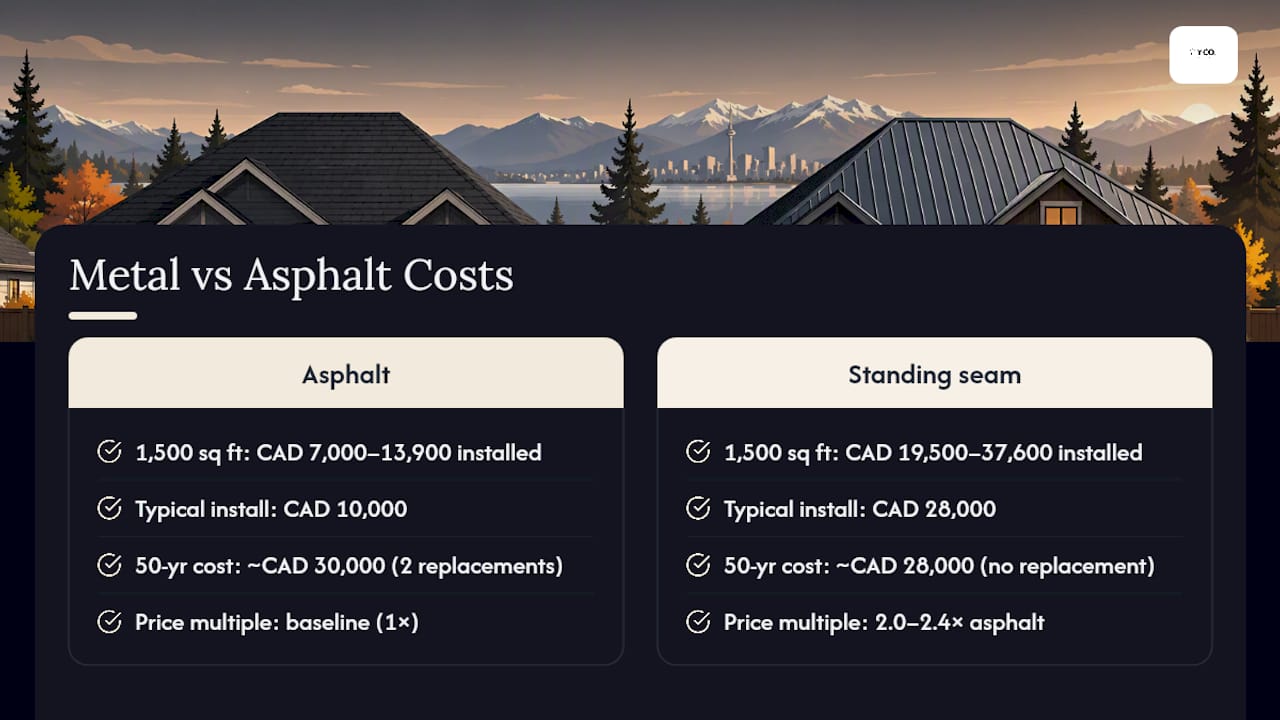
Put that in real terms: on a 1,500 square foot roof in Ontario, asphalt shingles usually cost between CAD 7,000 and CAD 13,900 installed, while a comparable standing seam metal roof runs CAD 19,500 to CAD 37,600. That's the two to three times premium homeowners keep hearing about, and it's real.
A pricing snapshot worth knowing: Canadian guides pin the typical metal premium at roughly 2.0 to 2.4 times the installed cost of asphalt, with the break-even point where metal's lower lifetime cost overtakes asphalt's cheaper upfront price landing around year 21 to 25 in most regions.
That break-even window is the number that should actually drive your decision, more than the sticker price on either quote. Run a simple Net Present Value comparison: asphalt at CAD 10,000 installed, replaced twice over 50 years (call it CAD 30,000 total with rising labour costs), versus a CAD 28,000 metal roof that needs no replacement in that window. By year 25, metal has usually pulled ahead, and by year 40, the gap is significant.
Labour availability and roof complexity move these numbers more than most homeowners expect. Steep slopes, multiple valleys, and dormers add installation hours regardless of material, and standing seam crews are scarcer than asphalt crews in most provinces, which can stretch lead times to several weeks or months during peak season.
Before you sign anything, get at least three detailed quotes that spell out material gauge, underlayment type, and labour separately. A quote that just says "metal roof, CAD 24,000" tells you nothing about what you're actually buying.
How long does each roofing material really last?
Manufacturer brochures love round numbers. Real-world lifespans depend heavily on installation quality, local climate, and which specific product you chose within each category.
Asphalt shingles split into two rough tiers. Basic three-tab shingles last roughly 15 to 20 years, while architectural or dimensional shingles, thicker and heavier, typically reach 25 to 30 years or more with good attic ventilation. Metal roofing spans a wider range: 40 to 70+ years depending on gauge, coating, and system type.
What actually kills each material early:
- Asphalt failure modes: UV degradation dries out the asphalt binder over time; freeze-thaw cycling cracks brittle shingles; poor attic ventilation traps heat and moisture that shortens life from underneath.
- Metal failure modes: exposed fasteners loosen and their rubber washers degrade over 10 to 20 years, creating leak points; wrong gauge steel dents easily under hail or foot traffic; poor panel spacing causes oil-canning that's cosmetic but signals a rushed install.
The gap between a mediocre metal roof and an excellent one comes down almost entirely to installation choices, not the raw material cost. Standing seam systems that use hidden clips let panels expand and contract with temperature swings without stressing the fasteners, which is precisely why they outlast exposed-fastener systems by decades in most climates.
Pro Tip: Before hiring anyone for a metal roof, ask to see two or three local installations that are at least ten years old. A contractor confident in their work will happily drive you past a past project; one who hesitates is telling you something.
Which roof handles snow, ice, and hail better?
Weather exposure should weigh as heavily in your decision as budget does, and the two materials respond to Canadian winters in genuinely different ways.
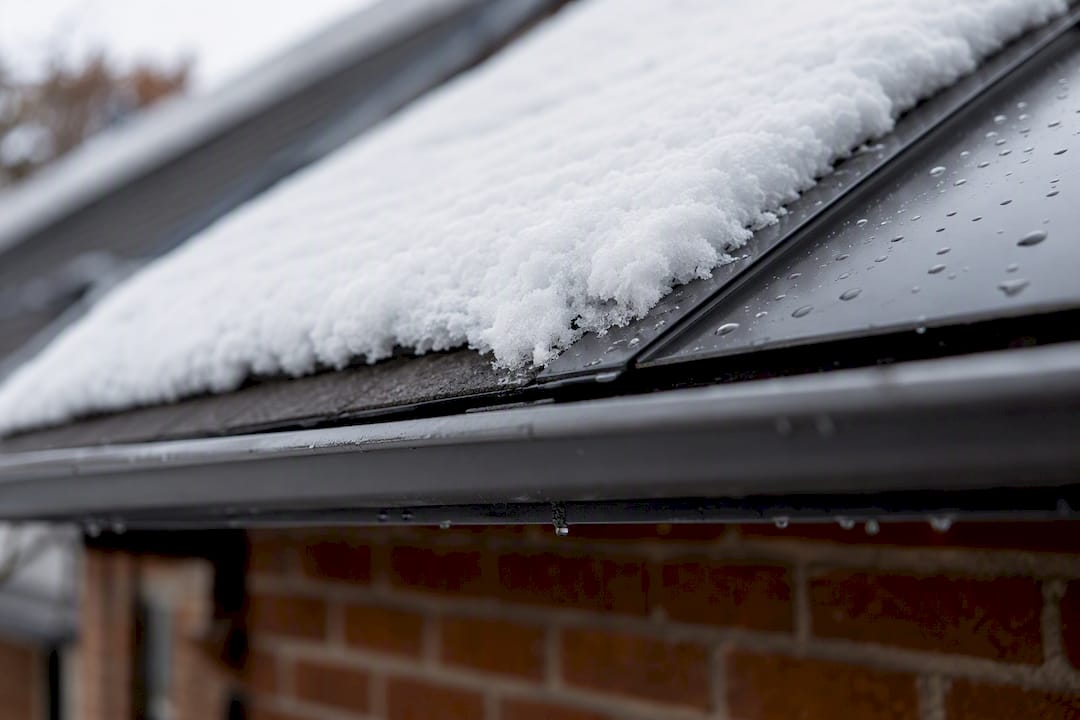
Metal sheds snow off the roof surface almost immediately after a storm, which reduces the load on your structure but creates a real hazard below: sliding snow and ice can injure someone or damage landscaping if you skip snow guards. Asphalt does the opposite. It holds snow on the surface, which sounds safer until that retained snow melts and refreezes at the eaves, feeding ice dams that back water up under your shingles.
Both problems have the same fix, and it's non-negotiable in cold regions: self-adhering ice-and-water shield along the eaves, required under the National Building Code's section 9.26 wherever design temperatures drop to −18°C or below.
- Hail: metal can dent cosmetically but usually keeps its watertight seal; asphalt loses protective granules on impact and can fail well ahead of schedule in hail belts.
- Wind: properly engineered standing seam systems handle high uplift forces well; premium architectural shingles installed with correct nailing patterns also perform respectably.
- Insurance: some insurers offer premium discounts for impact-resistant roofing in hail-prone regions, so it's worth asking your provider directly rather than assuming either material qualifies.
What separates a good roof installation from a bad one?
The material you choose matters less than the crew installing it. A cheap standing seam job with the wrong gauge steel will underperform a well-installed architectural asphalt roof, full stop.
Before signing a contract, insist the scope specifies panel gauge and finish coating for metal, hidden clips rather than exposed fasteners for any standing seam system, and synthetic underlayment plus ice-and-water shield at all eaves and valleys. Flashing details around chimneys, skylights, and valleys deserve their own line item. Vague language like "standard flashing included" is where corners get cut.
Maintenance differs by material too. Asphalt roofs need an annual visual check for granule loss, curling edges, and any damaged shingles after storms. Metal roofs need fastener and flashing checks (on exposed-fastener systems especially), debris clearing from valleys, and a look at snow guard integrity before winter.
Watch for these red flags before you hire anyone:
- A warranty that doesn't specify what's covered versus what voids it
- No written scope breaking out material, labour, and underlayment separately
- Reluctance to provide addresses of past local installations
- Pricing that seems far below the other two quotes with no explanation
- No mention of ice-and-water shield in a climate that clearly requires it
Pro Tip: If you're considering solar panels down the road, ask about standing seam's non-penetrating clamp systems. Metal panels can anchor solar mounts without a single roof penetration, which asphalt simply can't offer.
How do you decide between asphalt and metal for your home?
Strip away the marketing and this decision comes down to three questions: how long will you own the house, what's your climate exposure, and what can you actually spend today?
- Short hold or tight budget: asphalt shingles, ideally architectural grade rather than basic three-tab, unless you're specifically in a hail-heavy zone where impact resistance changes the math.
- Long hold, harsh winters, or low tolerance for maintenance: standing seam metal, budget permitting, or stone-coated steel if you want metal's durability with a shingle-like appearance.
- Mixed situations: some homeowners put metal on low-slope sections prone to ice damming while keeping asphalt on steeper main roof planes where snow shedding is less of a concern.
Ask any contractor bidding the job three things: what gauge and coating are specified, what the labour warranty covers versus the manufacturer warranty, and whether they'll finance through a loan or expect payment from savings on a fixed schedule. Financing terms matter more for metal given the higher principal, and a contractor unwilling to discuss payment structure clearly is worth a second look.
What should a contractor check before touching your roof?
Roofing rarely happens in isolation on a full renovation. Ask any contractor managing the work to produce material specs including gauge and coating, underlayment type, and warranty wording in writing before a shovel touches your roof. Confirm proof of licensing and insurance for the specific trade doing the roofing work, not just the general contractor.
A properly run project sequences a site visit, defines scope, pulls permits where required, then coordinates roofing with other trades so nobody's work gets undone by someone working above them. Cory Yefet manages that sequencing directly on Y&CO Build projects as the single point of contact from feasibility through completion. If you're adding solar mounts or converting to a heavier material, ask whether an engineered structural assessment is warranted before work begins.
What homeowners get wrong about this decision
Most homeowners fixate on the material label when they should be scrutinizing the installer's specification sheet. A cheap standing seam job with exposed fasteners and thin gauge steel will disappoint you faster than a well-installed architectural asphalt roof ever would, and that's the part vendor brochures never mention. Cost, lifespan, and installer quality all move together. If you take one thing from this comparison, get three detailed quotes with references and full scopes before signing anything.
— Cory
How Y&CO Build handles roofing inside a full renovation
If you're planning a full-home renovation or addition and the roof needs attention along the way, Y&CO Build gives you one accountable point of contact managing that roofing decision alongside everything else, rather than juggling a separate roofer, a general contractor, and a designer who aren't talking to each other.
We handle the site assessment, coordinate permitting, and sequence roofing work with the other trades on your project so nothing gets damaged or redone. Cory Yefet stays involved from the initial feasibility study through final completion, which means the roofing scope, material specification, and budget get decided once, with clear numbers, instead of getting renegotiated mid-project. If your renovation involves structural changes, an addition, or a roof that needs replacing as part of the broader scope, start with our full-home renovations page to see how the process works and request a consultation.
Sources
Figures in this comparison draw from Homeowner.ca's metal roofing cost breakdown, RoofingCalculatorHQ's 2026 Canadian pricing guide, and Green Building Canada's lifecycle comparison. Building code requirements referenced come from the National Building Code's section 9.26. Local codes, licensing requirements, and material availability vary by province, so confirm specifics with a licensed contractor in your area.
- Asphalt vs Metal Roof Cost — Canada 2026 Comparison
- Why standing-seam metal roofing costs 3x more than asphalt but saves money over 50 years? - Canadian Home Magazine
- Metal roofs vs shingles - Green Building Canada
FAQ
What is the biggest problem with metal roofs?
Poor installation is the biggest risk, specifically exposed fasteners whose rubber washers degrade over time and create leak points. This is why standing seam systems with hidden clips tend to outperform cheaper exposed-fastener panels over the long run.
How much more expensive is a metal roof over asphalt?
Metal roofing typically costs two to three times more upfront than asphalt shingles, with Canadian pricing guides pegging the premium closer to 2.0 to 2.4 times for standing seam specifically. That gap narrows over time since metal typically lasts two to four times longer.
What is the best roof for a home?
There's no single best roof. Asphalt shingles suit shorter ownership horizons and tighter budgets, while metal roofing suits long-term owners in harsh climates who want to avoid a second reroof during their time in the house. A full-home renovation contractor like Y&CO Build can help you weigh that decision alongside the rest of your project scope.
Why not put a metal roof over shingles?
Layering metal directly over old shingles traps moisture and can void manufacturer warranties on both products, since the assembly wasn't engineered to work together. A proper metal roof install removes the old roofing down to the deck and adds correct underlayment and ice-and-water shield before the new panels go on.
Does a metal roof actually last longer in a Canadian winter?
Yes. Metal sheds snow rather than holding it on the surface, which reduces the ice-dam risk that plagues asphalt roofs without proper attic ventilation. Combined with a 40 to 70+ year lifespan versus asphalt's 15 to 30 years, metal is generally the stronger performer in harsh winter climates.